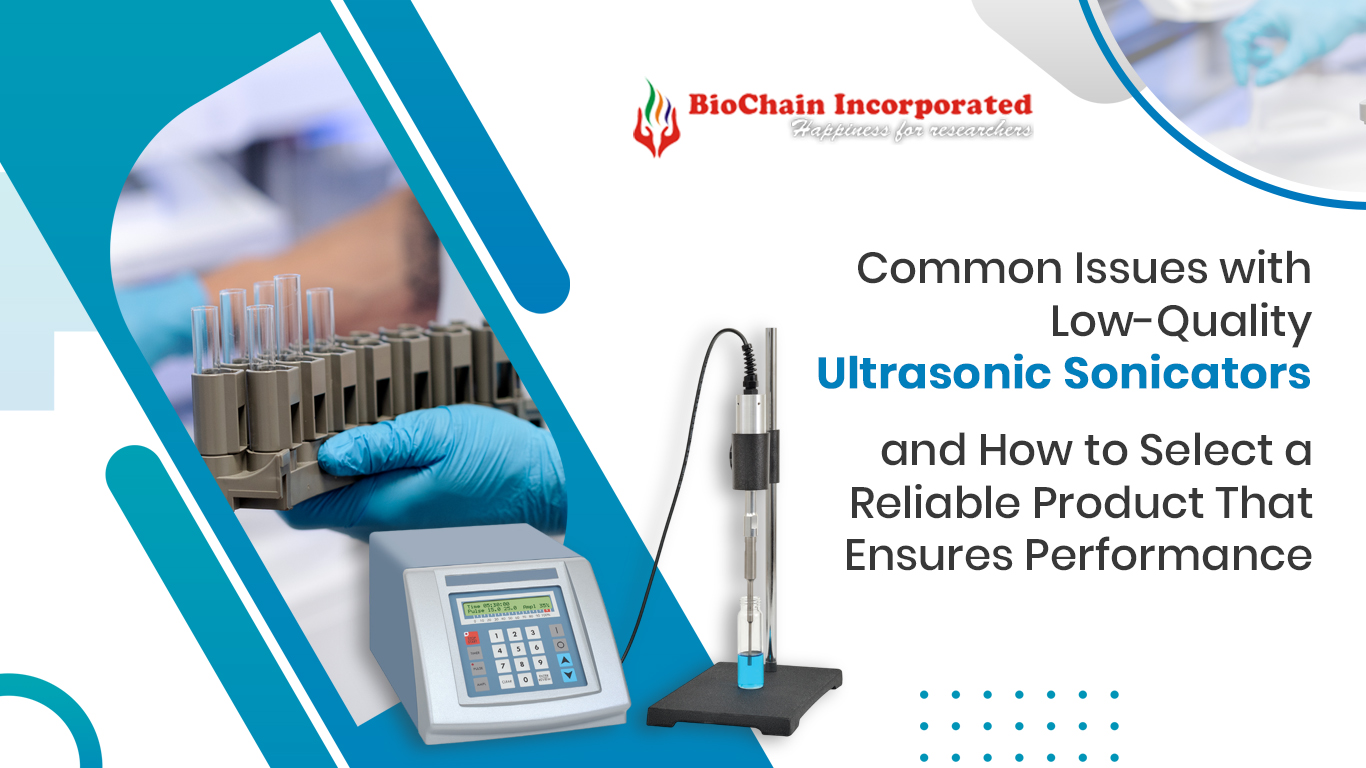
Sonicator Applications, Types, and How to Choose the Right One for Your Lab
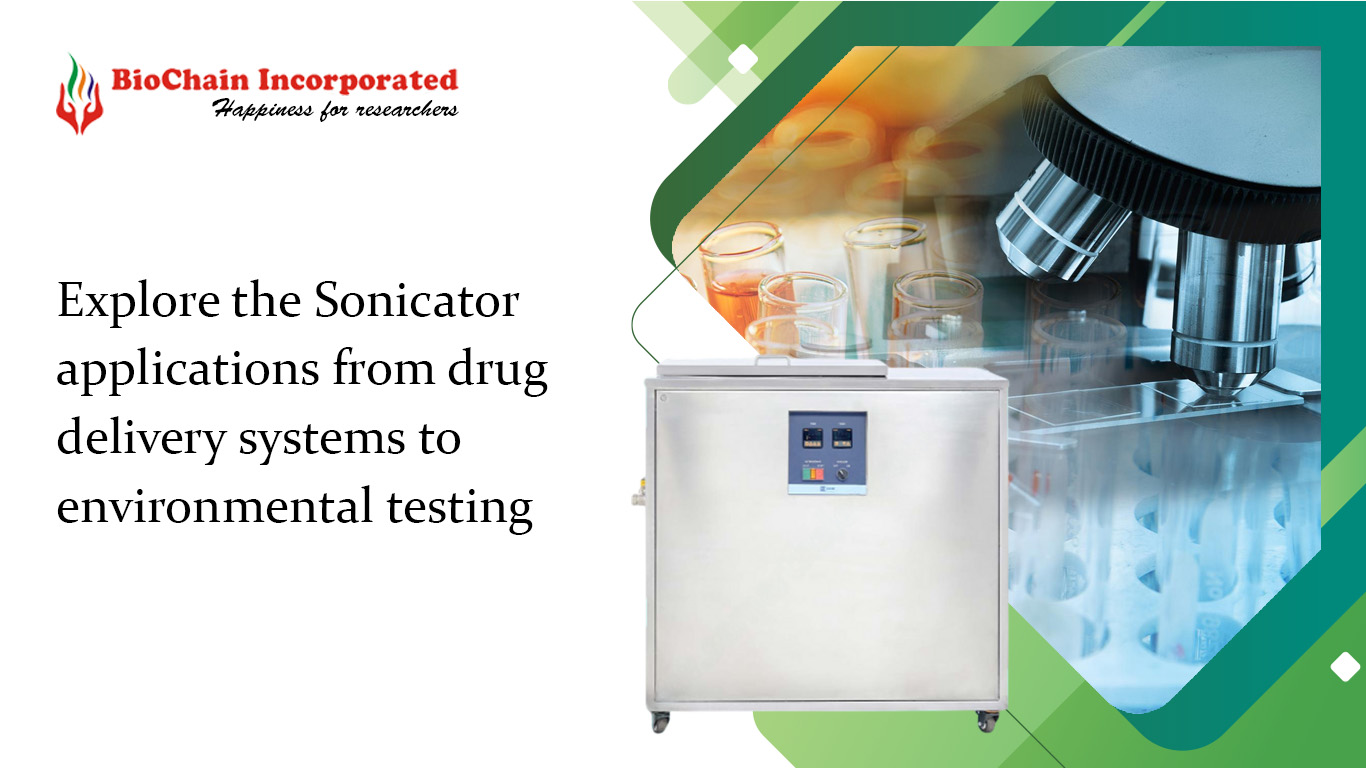
Sonication has become a de facto method in labs for carrying out cell disruption, solubilizing, and reaction acceleration by means of ultrasonic waves of high frequency. The main device that performs this operation is called a sonicator. Exploration of its application, the types of devices available, and the selection criteria are all indispensable for maximum efficiency and accuracy in the laboratory.
Sonicators provided by Biochain, a leading sonicator supplier in India, give researchers a choice of cutting-edge sonication devices. Research and clinical laboratories around the globe rely on Biochain's sonicators due to their robustness, simple controls, and reliability. The company also offers excellent technical support and product customization, which is very helpful in meeting the research workflow requirements.
Applications of Sonicators
- Sonicators are essential tools in many areas of science, including molecular biology, chemistry, and pharmaceutical research. A few examples of their applications are as follows:
- Cell Disruption and Lysis: Sonicators efficiently open the cells which then become sources of nucleic acids, proteins, and other intracellular substances necessary for further analyses such as PCR or Western blotting.
- Homogenization and Emulsification: It is a perfect method for immiscible liquid mixing or particle size reduction in suspensions, which can be done in nanoparticulate preparation and cosmetics research.
- Degassing and Solvent Extraction: Where conjunct is for them areas of liquids that are dissolution gases or they are extraction process of compounds from plants and tissues samples.
Types of Sonicators
There are several types of sonicators for specific lab needs:
- Probe Sonicators: Energy in the form of ultrasonic waves with high intensity is directly delivered to the sample through a titanium probe. These are the best fit for volumes of small scales and tasks that require powerful input.
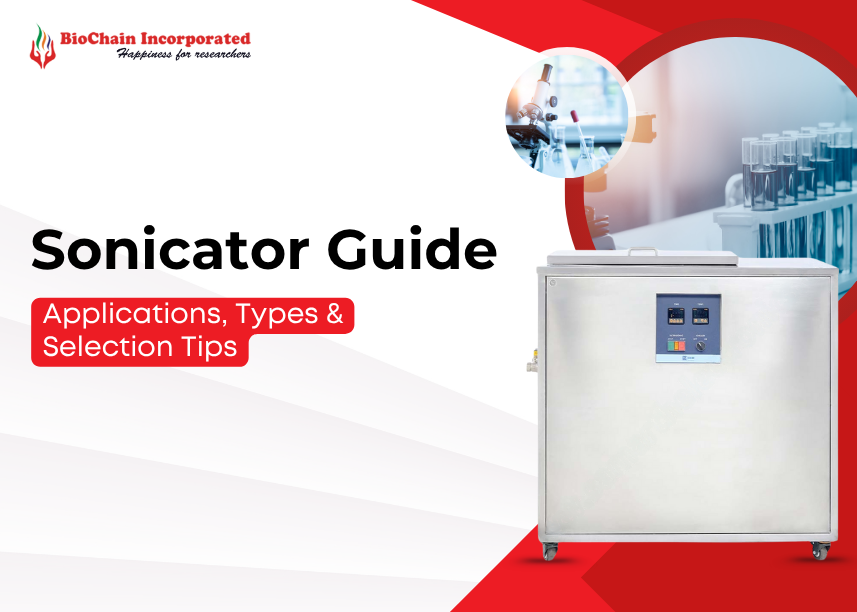
- Bath Sonicators: Energy in the form of ultrasonic waves in a uniform manner is distributed by the water bath into which the samples are placed. Such sonicators are good for cleaning, and gentle degassing of a number of small containers at the same time.
- Ultrasonic Processors: The high functional systems which offer exact control of the amplitude, time, and temperature are used for industrial sonication or for doing complex operations such as DNA transfer.
How to Choose the Right Sonicator
The sonicator that best fits your sample type, volume, and application is the most suitable one. Key factors are:
- Volume and Throughput: If you have high-throughput labs, then sonicators using a bath or multi-probe systems are more suitable. A probe sonicator fits only if you have a small volume and need high energy.
- Sample Sensitivity: It is the best idea to have a device with adjustable power settings if you work with biological materials that are sensitive to heat.
- Application Complexity: The most difficult steps require programmed systems with digital control and temperature monitoring.
Whether you are conducting simple research or complex molecular analysis, a sonicator provider like Biochain Incorporated that gives you the opportunity to purchase the right sonicator can be a great way of facilitating your lab productivity and results.