The Lipase Manufacturing Process: From Research to Production
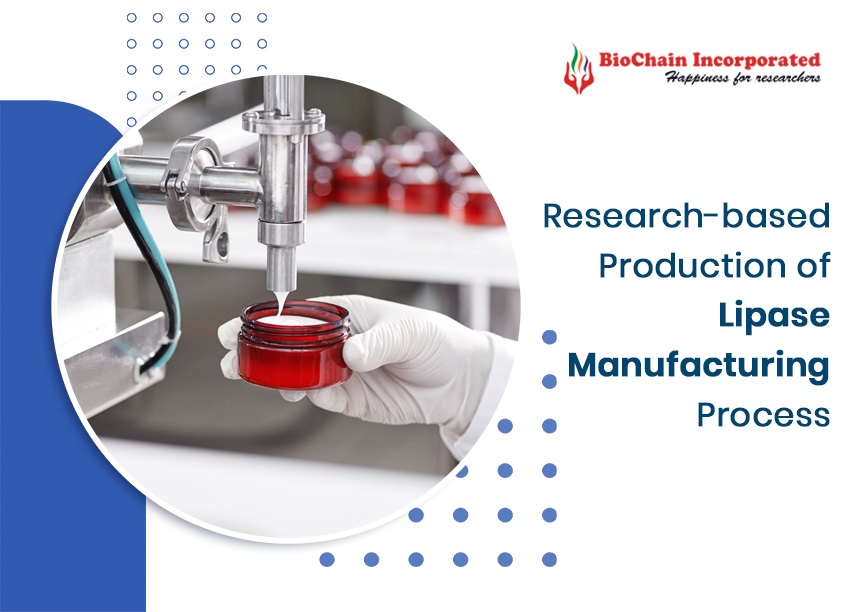
Lipases can be said to be the lifeline of modern biocatalysis which is used intensively across various industries i.e. food and pharmaceuticals, biodiesel, and waste management. The hydrolysis of fats into glycerol and free fatty acids is the main work lipases do; therefore, they are of great value to those applications requiring the precise breakdown of fat. The question is: How are these enzymes developed and produced on an industrial scale? The lipase manufacturing process is completed with a bouquet of biotechnological studies, fermentation technology, purification, and quality control. Biochain is an unmatched leader in the manufacture of lipase with superior quality of manufacturing and advanced logistics employed at every step from the get-go. Here is how the research journey is made to large-scale production of Lipase by various lipase manufacturers in India.
Research and Strain Selection
Newly developed methods such as genetic engineering and extreme environment adaptation are frequently put to use for the production of lipase and its characteristics’ improvement. Scientists can, for example, insert the lipase-producing genes into those host organisms which can multiply faster and be more adaptive, thus turning the whole process into something that is not only efficient but also cost-effective, e.g. E.coli. or B.subtilis.
Fermentation: Scaling Up Enzyme Production
The following step after the selection of a proper strain is fermentation. This is about growing microorganisms in such a way that they will expand in huge amounts and produce lipase in a sort of bioreactor. The choice of the fermentation method—either submerged or solid-state—largely varies on the microbes and the exact end of the application. Submerged fermentation (SmF) is the process of growing bacteria and other microorganisms in a liquid nutrient medium, which makes it possible to control the process and scale it up relatively easily. Solid-state fermentation (SSF) is a typical method in the case of fungi. This method is based on growing microorganisms on moist solid materials such as bran or bagasse, and it is also often economically more cost-effective for specific applications. Temperature, pH, oxygen levels, and nutrient concentration are thus kept under strict control during the fermentation process to extract the maximum amount of the enzymes by prominant lipase manufacturers.
Enzyme Extraction and Purification
The process of enzyme extraction from the waste along with the culture medium is the very next step after the fermentation process is done. The extraction is commonly initiated by means such as filtration or centrifugation to get the fermentation broth freed from the cells of the microorganism. Then the extracted enzyme solution is to be purified. The methods include the following: Precipitation (ammonium sulfate or solvents are used to separate enzymes from other particles), Ultrafiltration (the process is applied to make the enzyme salt-free and concentrate), Using Chromatography (such as the ion exchange, gel filtration or affinity chromatography) to obtain very clean products. Which purity the final product will have been the ending purpose of the purification process. For industrial uses, total purification may not be necessary. Sometimes, even if enough, sectors like pharmaceuticals or medical diagnostics will still need the highest purity level, and so on.
Formulation and Stabilization
After the lipase enzyme has been purified, it is still unstable and so to enhance stability, it must be formulated. These are the common formulations: Liquid enzyme preparations that have a high degree of stability through the use of proper buffers and preservatives. Dry enzyme powder, that is, freeze-dried powder is the best to handle and store. Its immobilization on a solid support is a technique of lipase reusability in continuous processes and is of particular importance in the processing of biodiesel and food. Adding chemicals like sugars, polyols, or salts to the formulation is a way of making the enzymes remain active in storage and transportation.
Quality Control and Regulatory Compliance
Before the lipase is finally available in the market, it has to pass the quality control process. The tests are based on the enzyme activity, stability, pH and temperature optima, purity, and absence of microbial contaminants. In the case of pharmaceutical and food-grade applications, the FDA or EFSA are responsible for the safety of the consumer, and they will ask for additional tests, such as allergenicity and toxicity tests. Each batch has to stay in line with the established parameters to secure the performance and consistency of lipase production. Trust is very much dependent on this particular stage and the company needs to fulfill the international quality standards, for instance, the ISO and GMP standards, without any delay.
Packaging and Distribution
The final step involves packaging the lipase in suitable containers—vials, drums, or sachets—depending on its form and application. Proper labeling with storage conditions, expiration dates, and safety instructions is essential. From here, the product is distributed to manufacturers, research labs, or retailers worldwide.
The production of lipase is a complex, multidisciplinary process that blends microbiology, chemical engineering, and regulatory science. Trust Biochain, because when it comes to finding the best lipase manufacturers you can’t go wrong in choosing them. At Biochain, from the initial research phase to large-scale production and quality assurance, every step is designed to maximize efficiency, safety, and enzyme performance. As global industries increasingly turn to sustainable and bio-based solutions, lipase continues to play a critical role in shaping greener, more efficient processes.